


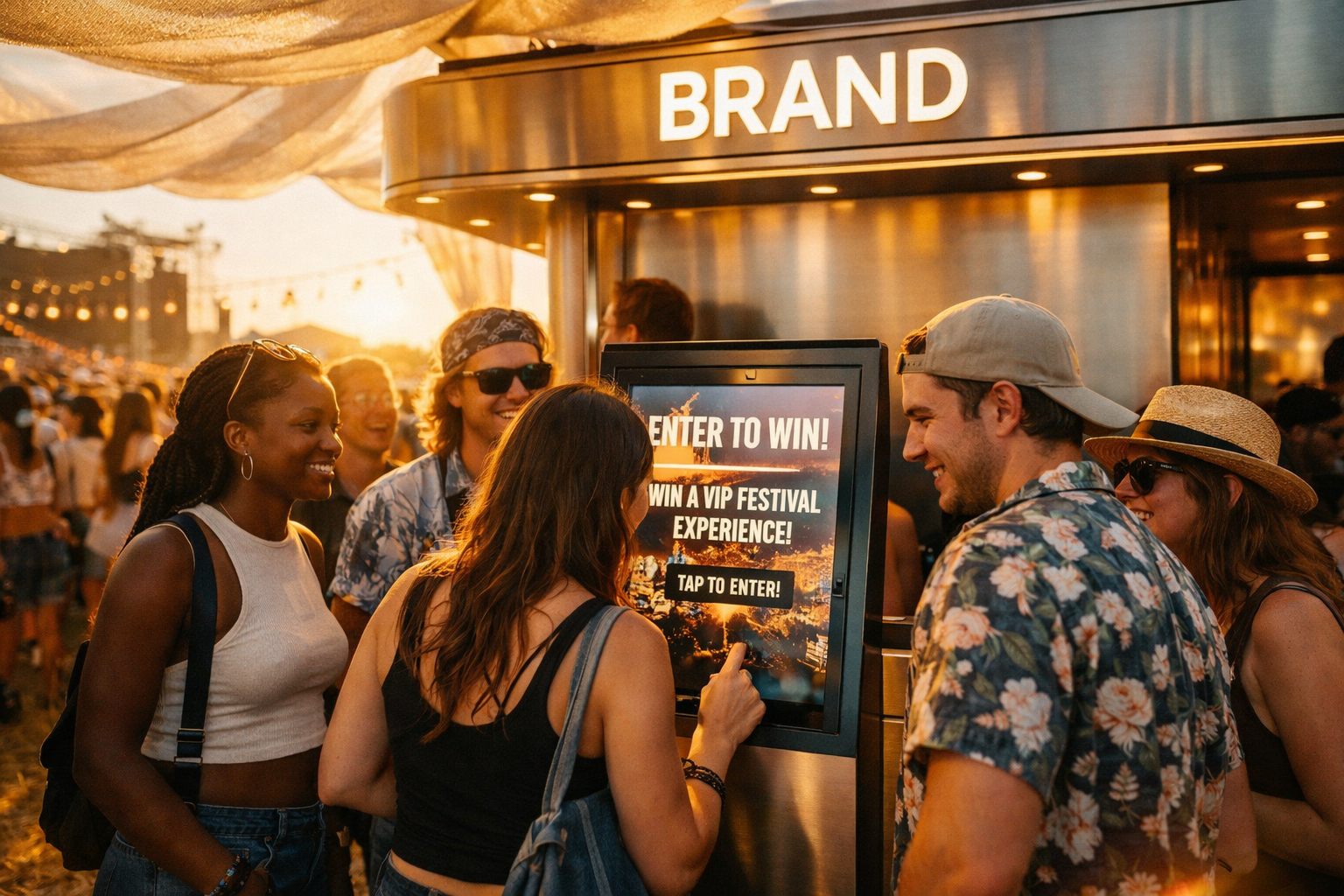
A brand pays $25,000 to sponsor your festival. Their logo goes on the stage banner, the printed program, and maybe a social media shoutout. The event ends. The sponsor asks what they got for their money.
You send them photos of their banner.
That is not a sponsorship activation. That is wallpaper. And it is why sponsor retention across the live events industry remains stubbornly low — most sponsors churn within two renewal cycles because they cannot connect their spend to any measurable business outcome.
The fix is not better banners. It is infrastructure. When sponsorship activations are built into the digital layer of an event — the ticketing platform, the checkout flow, the post-event communication — every interaction becomes trackable, attributable, and reportable. The sponsor does not have to guess whether their investment worked. They can see it.
This is sponsorship activation infrastructure: the systems, workflows, and data pipelines that turn a passive brand placement into a measurable engagement engine.
Why Traditional Sponsorship Fails the ROI Test
Traditional sponsorship packages are built on exposure metrics. Impressions. Estimated foot traffic. Logo placement tiers (Gold, Silver, Bronze — the taxonomy of vagueness).
The problem is structural. Physical placements generate no first-party data. A banner does not know who looked at it. A branded napkin does not capture an email address. A logo on the Jumbotron does not attribute a single downstream purchase.
Sponsors have learned this. The brands writing six-figure checks are the same brands running attribution-obsessed digital ad campaigns where every click, view, and conversion is tracked to the cent. When they look at their event sponsorship line item and see "estimated impressions," they see a black hole.
This gap is why events function as entire economies but sponsorship revenue stays flat. Promoters leave money on the table not because sponsors do not want to spend, but because they cannot justify the spend internally.
The solution: make sponsorship activations as measurable as the digital campaigns sponsors already run.
What Sponsorship Activation Infrastructure Actually Looks Like
Sponsorship activation infrastructure is the layer between "brand pays money" and "brand sees results." It includes the tools that create interactive touchpoints, the data systems that capture engagement, and the reporting dashboards that prove ROI.
When this infrastructure lives inside the ticketing platform, something powerful happens: every activation ties directly to the ticket buyer. Not anonymous impressions. Known individuals with purchase history, demographic data, and behavioral signals.
That is the shift. Sponsorship stops being a marketing expense and starts being a customer acquisition channel — with the data to prove it.
Here are six activation types that turn sponsorship from guesswork into a measurable growth lever.
1. Branded Sweepstakes and Giveaways
A sponsor wants exposure. Give them something better: direct engagement with your audience, with every entry captured and attributed.
Here is how it works. A beverage brand sponsors your concert series. Instead of a banner, they get a branded sweepstakes embedded in the ticket purchase flow. Every buyer sees the offer — "Enter to win a VIP backstage experience, presented by [Brand]" — and opts in with a single tap.
The activation captures the entrant's name, email, ticket type, and purchase amount. The sponsor walks away with a list of qualified, engaged prospects who actively chose to interact with their brand. Not estimated impressions. Verified engagement.
Sweepstakes work because they feel like a bonus to the attendee, not an interruption. The ticket buyer just spent money. Offering them a chance to win something immediately after purchase capitalizes on the dopamine spike of commitment.
The data layer matters here. When sweepstakes entries flow into a CRM system alongside ticket purchase data, the sponsor can segment entrants by spend level, event type, and geography. A beer brand learns that 73% of their sweepstakes entrants bought VIP tickets to hip-hop events in the Southeast. That is not a sponsorship report. That is a market research goldmine.
2. Sponsored Surveys and Audience Intelligence
Most sponsors want more than visibility. They want insight. Surveys embedded in the ticket purchase or post-event communication flow deliver both.
A automotive brand sponsors a multi-day music festival. Their activation: a three-question survey served to every ticket buyer after checkout. "What is your primary mode of transportation to the event?" "Are you in the market for a new vehicle in the next 12 months?" "Which vehicle features matter most to you?"
The attendee answers in 30 seconds. The sponsor gets purchase-intent data tied to a verified event attendee — someone with known spending behavior and demographic information. This is the kind of audience data infrastructure that transforms a one-time sponsorship into a long-term intelligence pipeline.
Surveys also serve the promoter. Every response enriches your audience profile. You learn what your attendees drive, what they drink, where they shop. That intelligence makes your next sponsorship pitch sharper, because you are not selling estimated demographics. You are selling verified behavioral data.
The key is keeping surveys short and contextually relevant. Three to five questions, served at the right moment, with clear value exchange (a discount code, a contest entry, early access to the next event). Response rates on well-timed post-checkout surveys routinely exceed 40%.
3. Sponsored VIP Upgrades and Upsells
Every ticket buyer who purchases general admission is a potential upsell. When a sponsor underwrites that upsell, everyone wins.
Picture this: a ticket buyer completes their GA purchase. On the confirmation page, they see an offer — "Upgrade to VIP for $49 (regularly $99), presented by [Sponsor]." The sponsor subsidizes the discount. The attendee gets a premium experience at half price. The promoter captures the upsell revenue.
This activation type is powerful because it creates a direct, positive brand association. The attendee does not just see the sponsor's logo. They save $50 because of the sponsor. That is brand equity you cannot buy with a banner.
On the data side, every upgrade is tracked: who upgraded, from which ticket tier, at which price point, for which event. The sponsor sees exactly how many conversions their subsidized offer generated. The promoter can demonstrate that the sponsor directly influenced purchasing behavior — the holy grail of sponsorship reporting.
Upsells also create natural segmentation. Attendees who upgrade to VIP are, by definition, higher-value customers. Sponsors targeting affluent demographics can focus their activations on this segment specifically, and the data confirms the audience quality.
4. Experience-Based Activations and Digital Redemptions
Physical activations at events — branded lounges, product sampling stations, interactive installations — are not new. What is new is connecting them to the digital layer so every interaction is captured.
A spirits brand sets up a tasting lounge at your festival. Attendees access the lounge by scanning a QR code on their digital ticket. That scan logs who entered, when, and ties it to their ticket purchase data. The brand now knows that 340 attendees visited their lounge, 68% of whom were VIP ticket holders, and their average ticket spend was $187.
Without the digital layer, the brand counts foot traffic with a clicker. With it, they get a full profile of every visitor.
Digital redemption codes take this further. A sponsor offers every ticket buyer a free product sample, redeemable at the event or at retail locations afterward. Each redemption is tracked. The sponsor sees a direct line from sponsorship investment to product trial. Post-event, the CRM captures which attendees redeemed and which did not, enabling targeted follow-up campaigns.
This is where a CRM built for events earns its keep. When every digital interaction — sweepstakes entry, survey response, upgrade purchase, lounge visit, product redemption — feeds into a single attendee profile, the sponsor's reporting becomes multidimensional. They do not just see one activation's results. They see the full picture of how their brand intersected with the event audience.
5. Sponsored Content and Communication Touchpoints
The event does not start when doors open. It starts when the ticket is purchased. And it does not end when the lights go down. It extends through every post-event communication.
This timeline is sponsorship real estate. Pre-event emails, push notifications, ticket confirmations, post-event surveys, and thank-you messages are all touchpoints where sponsors can deliver value — not just logos, but useful content.
A rideshare company sponsors the "Getting There" section of pre-event communications. Every ticket buyer receives a branded message with a discount code for rides to the venue. The rideshare company gets tracked redemptions. The promoter solves a logistics pain point. The attendee saves money on transportation.
A hospitality brand sponsors the post-event follow-up. "Thanks for attending. Book your hotel for next year's event at 15% off, presented by [Hotel Brand]." Every booking is tracked and attributed to the sponsorship.
These touchpoints work because they are contextually relevant. The attendee is already thinking about transportation, lodging, or their next event experience. The sponsor's message arrives as utility, not advertising.
6. Affiliate-Driven Sponsor Distribution
Sponsors do not just want to reach your existing audience. They want to help you grow it — if they get credit for the growth.
When a sponsor's promotional channels drive ticket sales through tracked affiliate links, the sponsorship becomes a performance marketing channel. The brand promotes the event to their audience. Every ticket sold through their link is attributed. The sponsor sees exactly how many tickets their promotion generated, what those buyers spent, and what their conversion rate was.
This model flips the traditional sponsorship dynamic. Instead of paying for exposure and hoping it works, the sponsor invests in distribution and measures the return. Affiliate program infrastructure makes this possible by generating unique tracking links, attributing sales, and reporting results in real time.
For the promoter, this activation type is a force multiplier. The sponsor's marketing budget becomes your distribution budget. Their email list, social following, and ad spend all point toward your event — with full attribution on both sides.
What Sponsorship Reporting Should Look Like
If you cannot hand a sponsor a report that looks like a digital ad campaign dashboard, your reporting is not good enough.
Per-Activation Metrics
- Total impressions (how many attendees saw the activation)
- Engagement rate (how many interacted)
- Conversion rate (how many completed the desired action)
- Revenue attributed (upsells, affiliate sales, product redemptions)
Audience Profile
- Demographics of engaged attendees
- Ticket tier distribution (GA vs. VIP vs. Premium)
- Geographic breakdown
- Average ticket spend of engaged audience
Comparative Performance
- Activation performance vs. previous events
- Engagement by activation type
- Audience overlap across multiple activations
When analytics are built into the platform, this reporting generates automatically. No spreadsheets. No manual counting. The sponsor logs in, sees their dashboard, and knows exactly what their investment produced.
This is also the retention play. When a sponsor can see that their sweepstakes generated 2,400 qualified leads, their survey captured 1,100 purchase-intent responses, and their VIP upgrade subsidy drove $18,000 in incremental revenue, the renewal conversation is not a negotiation. It is a formality.
Pricing Sponsorship Activations for Maximum Value
Traditional sponsorship pricing is tier-based. Digital activations should be value-based.
A sweepstakes that generates 3,000 leads is not worth the same as a logo on a banner. It is worth what those leads would cost the sponsor to acquire through their own channels. If the sponsor's cost per lead on Meta is $12, those 3,000 leads have a market value of $36,000. Price accordingly.
This reframing unlocks budgets that traditional sponsorship packages never touch. The sponsor is no longer comparing your package to another event's banner placement. They are comparing it to their digital acquisition costs. And when your activation delivers qualified, in-market leads at a lower cost per lead than their paid campaigns, the budget conversation changes entirely.
Automated revenue splitting makes complex pricing models feasible. Performance-based sponsorships, where the sponsor pays a base fee plus a per-engagement bonus, require real-time calculation and transparent reporting. When the platform handles the math, you can offer pricing structures that would be operationally impossible with manual accounting.
Building Your Sponsorship Activation Stack
Implementing sponsorship activation infrastructure does not require rebuilding your entire tech stack. It requires choosing a ticketing platform where these capabilities are native — not bolted on through integrations that break.
The core components:
Activation Tools. Sweepstakes, surveys, upsell offers, and digital redemption mechanics that live inside the ticket purchase and post-event communication flow.
Data Infrastructure. A CRM that captures every interaction and ties it to a known attendee profile.
Analytics and Reporting. Real-time dashboards that sponsors can access directly.
Revenue Operations. Automated splitting, payout tracking, and financial reporting.
When these components are integrated, the workflow becomes seamless.
The Compound Effect of Sponsorship Data
Here is what changes after your second event with activation infrastructure in place.
You approach a new sponsor not with an estimated audience size, but with verified engagement data from your last event. You show them that 64% of your VIP ticket holders engaged with at least one sponsored activation.
You are no longer selling hope. You are selling proof.
Over time, this data compounds.
This is why sponsorship activation infrastructure is not a feature. It is a strategic investment.
Frequently Asked Questions
What is a sponsorship activation at an event?
A sponsorship activation is any interactive experience that creates direct engagement between a sponsor's brand and event attendees.
How do you measure ROI on event sponsorship activations?
Measure through engagement, conversions, and attributed revenue.
What types of digital activations work best?
Sweepstakes, surveys, VIP upgrades, and affiliate distribution.
How should promoters price sponsorship activations?
Based on value delivered, not tiers.
How do sponsorship activations improve retention?
By providing measurable ROI.
Can small events offer sponsorship activations?
Yes. Digital activations scale down effectively.
Event sponsorship is not broken because sponsors do not want to spend. It is broken because the infrastructure has not existed to make that spend measurable.
Ready to build sponsorship activation infrastructure into your events?
Book a Demo