


What is event ticket pricing psychology?
Event ticket pricing psychology is the use of behavioral triggers—like anchoring, scarcity, and perceived value—to influence how buyers decide to purchase tickets. Instead of guessing prices, promoters structure pricing to increase conversions, create urgency, and maximize revenue per attendee.
Does raising ticket prices increase sales?
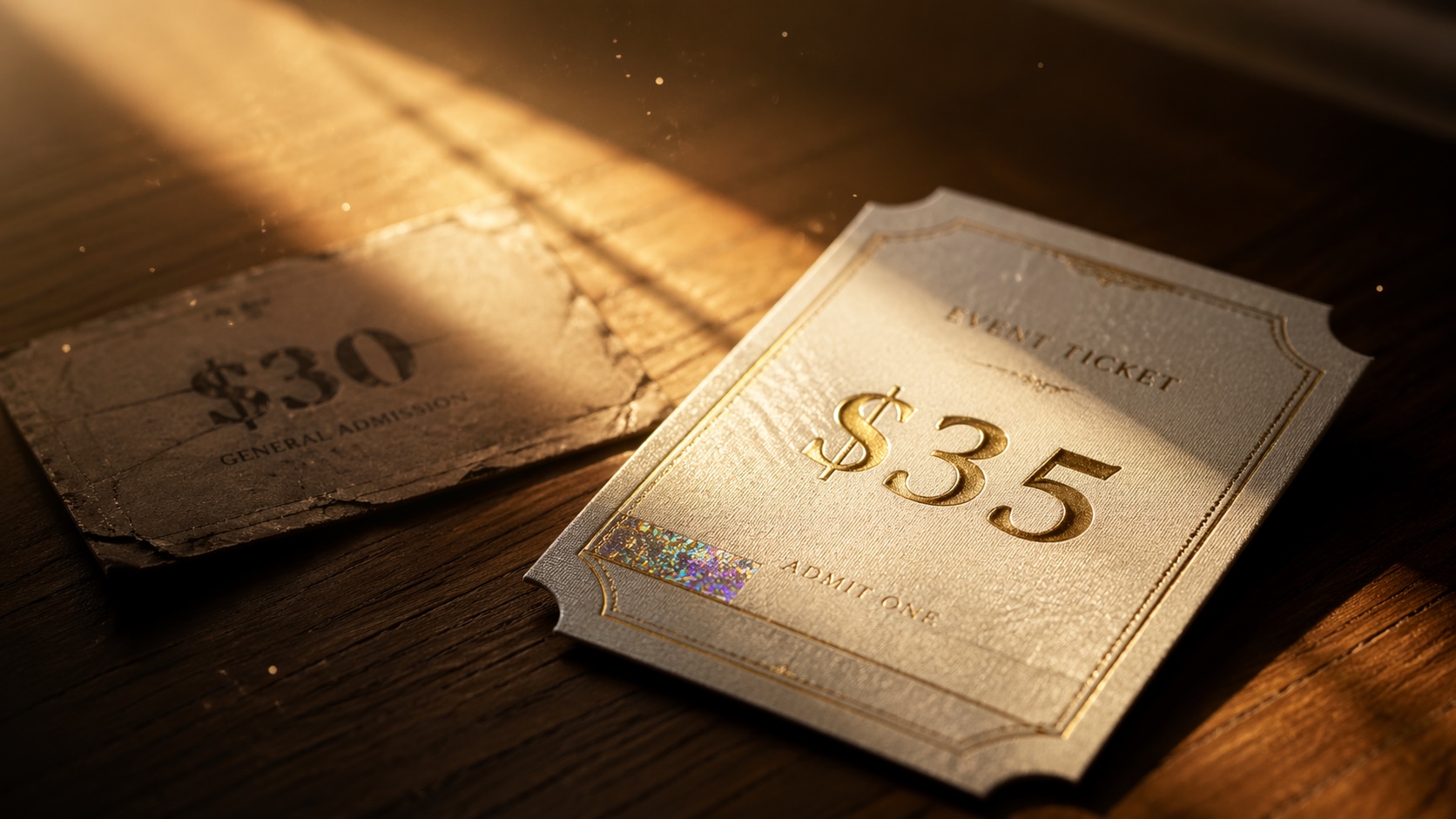
Yes—if the price aligns with perceived value. Higher prices can increase trust, signal quality, and attract better-fit buyers. Underpricing often reduces credibility. A well-positioned $35 ticket can outperform a $30 ticket because it feels more intentional and aligned with a premium experience.
What is the best event ticket pricing strategy?
The most effective strategy combines tiered pricing, anchoring, and urgency. You offer lower-priced tickets early, increase prices over time, and present higher tiers first to influence perception. This structure maximizes both conversion rate and total revenue without increasing attendance.
How does anchoring affect ticket sales?
Anchoring increases conversions by setting a high reference price first. When buyers see a $75 VIP ticket before a $35 GA ticket, the lower price feels more reasonable. Without anchoring, buyers evaluate the $35 price in isolation and are more likely to hesitate.
When should you use charm pricing?
Charm pricing (e.g., $29 instead of $30) works best for price-sensitive audiences and general admission tickets. It increases perceived affordability. However, for premium tiers, round numbers like $100 or $200 perform better because they signal quality and exclusivity.
Why does pricing affect perceived event quality?
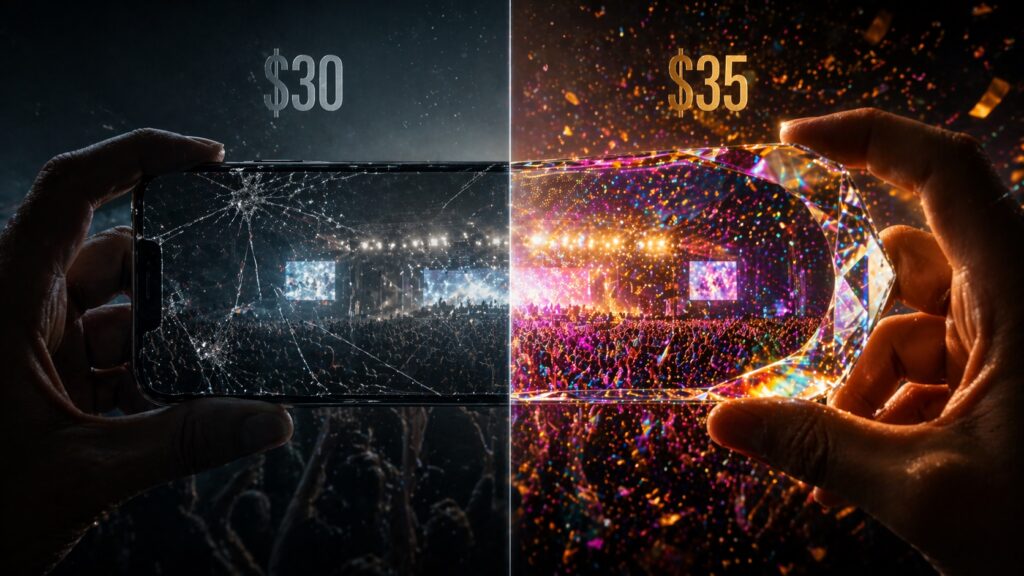
Buyers use price as a shortcut for quality. A low price creates doubt, while a higher price builds confidence. If your event looks premium but is priced too low, it creates a mismatch that reduces conversions and attracts the wrong audience.
How does tiered pricing increase revenue?
Tiered pricing increases revenue by combining urgency and segmentation. Early buyers get lower prices, while late buyers pay more. This captures different willingness-to-pay levels and drives faster sales momentum.
If you combine this with a pre-sale strategy, you can create even more urgency by giving early access to select audiences before the public launch.
What is decoy pricing and why does it work?
Decoy pricing introduces a higher-priced option to make another option more attractive. When buyers see three options, they tend to choose the middle one. A high-priced “Super VIP” tier makes the regular VIP tier feel like the best value.
How does loss aversion increase ticket sales?
Loss aversion increases conversions by framing the decision as avoiding a loss instead of gaining a benefit. Messaging like “Prices increase in 48 hours” creates urgency because buyers want to avoid paying more later, pushing faster purchase decisions.
How much revenue can pricing optimization generate?
Pricing optimization can significantly increase revenue without increasing attendance.
- Flat pricing → $30,000 (1,000 tickets at $30)
- Tiered pricing → $40,000
That is a $10,000 increase driven purely by pricing strategy.
What is the ideal ticket pricing structure?
| Tier | % Capacity | Strategy |
|---|---|---|
| Early Bird | 15–20% | Discount + urgency |
| Regular | 50–60% | Core revenue |
| Last Chance | 15–20% | Price increase |
| VIP | 5–10% | Premium |
| Super VIP | 2–5% | Decoy |
This structure balances conversion speed, perceived value, and revenue optimization.
How do you avoid losing conversions due to pricing?
Use transparent pricing
Hidden fees reduce trust and hurt conversions.
All-in pricing ensures buyers see the final price upfront, maintaining confidence and reducing drop-off at checkout.
Use flexible fee strategies
Different pricing tiers require different fee structures.
Platforms that support flat, percentage, and capped fee models allow you to protect margins while keeping prices competitive.
Use data to refine pricing
Pricing should evolve based on performance.
Audience data and analytics help you understand buyer behavior, optimize tiers, and improve future event revenue.
FAQ
Does increasing ticket prices reduce demand?
Not necessarily. If the price reflects value, it can increase trust and improve conversion rates. Poorly aligned pricing—not higher pricing—is what reduces demand.
How many ticket tiers should an event have?
Three to five tiers is optimal. This provides enough variation to capture different buyers without overwhelming them.
Should VIP tickets use charm pricing?
No. Premium tiers perform better with round numbers because they signal quality and exclusivity.
When should ticket prices increase?
Prices should increase in stages—typically when a tier sells out or as the event date approaches. This creates urgency and rewards early buyers.
What messaging increases ticket sales the most?
Time-based urgency works best:
- 48-hour warning
- 24-hour reminder
- final call
Specific deadlines outperform vague messaging.
The Bottom Line
Event pricing is not just a number—it is a psychological signal that shapes buyer perception, urgency, and decision-making.
Promoters who use structured pricing strategies consistently outperform those who price based on instinct.
👉 Ready to optimize your pricing strategy? Book a Demo