


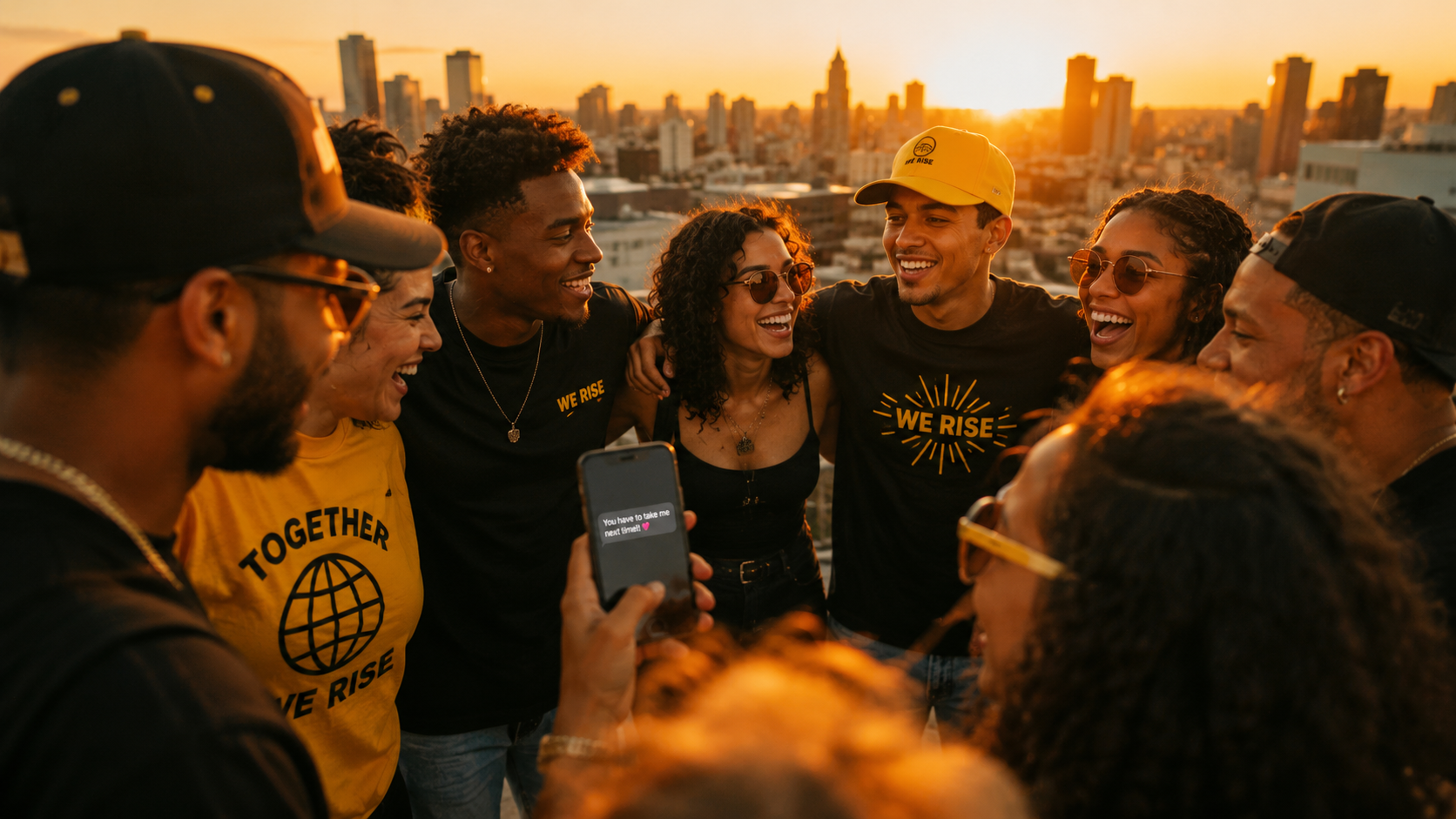
You sold out your last event. Great. But how many of those attendees would tell a friend about it without being asked? How many would post about it unprompted? How many would defend your brand in a comment section?
If you don't know the answer, you have an audience. You don't have a community.
That distinction matters more than most event promoters realize. An audience buys tickets. A community sells them for you.
And in a market where paid acquisition costs keep climbing, the promoters who build real communities around their events will be the ones who scale profitably. Everyone else will keep feeding the ad platforms.
This article breaks down four strategies for event community building that turn passive ticket buyers into active promoters, along with the technology that makes it work at scale.
Audience vs. Community: Why the Difference Matters
An audience is transactional. They see an ad, they buy a ticket, they show up, they leave. You start from zero again next time.
A community is relational. They identify with your brand. They talk about your events when you're not in the room. They bring friends not because you offered a discount, but because they want those friends to be part of what they're part of.
Here's the business case in plain numbers:
A community of 500 active fans who each bring 2 friends per event generates 1,000 organic ticket sales. At zero acquisition cost. No ad spend. No influencer fees. No promo codes burning holes in your margins.
If your average ticket price is $50, that's $50,000 in revenue per event from community alone. Over 10 events a year, that's half a million dollars you didn't have to pay to acquire.
That's not a marketing channel. That's a moat.
The question is how you build it. Not with a single tactic, but with a system.
Strategy 1: Referral Programs That Reward Loyalty, Not Just Action
Most referral programs are one-and-done. Share a link, get 10% off. The problem is that discounts attract deal-seekers, not advocates. You're buying a transaction, not building a relationship.
Effective event community building requires tiered referral rewards that increase with loyalty.
Here's what that looks like in practice:
- Tier 1 (1-3 referrals): A discount code for their next event. Standard, expected.
- Tier 2 (4-10 referrals): Early access to ticket sales before the general public. Now they feel like insiders.
- Tier 3 (11-25 referrals): Free VIP upgrade or backstage access. They're being rewarded with experiences money can't normally buy.
- Tier 4 (25+ referrals): Named recognition, a reserved spot, or an invitation to a private pre-event gathering. They're part of the inner circle.
The psychology here is important. Each tier doesn't just reward past behavior. It creates motivation for the next tier. Your top fans aren't just promoting your event. They're climbing a ladder that gives them increasing status within the community.
This is where a purpose-built affiliate program outperforms generic referral tools. You need real-time tracking, automated tier progression, and reward fulfillment that doesn't require your team to manage spreadsheets at 2 a.m.
TicketBlox's Tribe engine was built for exactly this. Every attendee gets a unique referral link. Referrals are tracked at the order level. Leaderboards show top referrers in real time. And tiered rewards trigger automatically as fans hit each threshold. No manual work. No missed payouts. No broken promises that erode trust.
Strategy 2: Ambassador Programs for Your Top 20
Not all fans are equal. In any community, roughly 20% of your attendees drive 80% of your word-of-mouth. These are the people who post about your events without being asked, who text their group chats the moment tickets drop, who show up early and stay late.
An ambassador program gives these people a title, a mission, and a reason to keep going.
Here's how to structure one:
Identification. Use your CRM data to find attendees who have been to 3+ events, referred others, or engaged with your content between events. This isn't guesswork. It's audience data applied strategically.
Invitation. Make it exclusive. A personal message, not a mass email. "You've been one of our most loyal supporters, and we want to make it official." People value what they're chosen for more than what they sign up for.
Benefits. Early access to every event. A dedicated point of contact on your team. Exclusive merch or experiences. Invitations to soundchecks, planning sessions, or after-parties. These don't have to cost much. They just have to feel special.
Expectations. In exchange, ambassadors commit to sharing a set number of posts per event cycle, bringing a minimum number of friends, and providing honest feedback on the event experience. This isn't unpaid labor. It's a value exchange between people who genuinely care about what you're building.
Recognition. Feature ambassadors on your social channels. Give them shoutouts from the stage. Create a private group where they connect with each other. The status itself becomes a reward.
TicketBlox's Tribe system supports ambassador programs natively. Each ambassador gets a trackable referral link, a position on the leaderboard, and automated commission or reward payouts based on their performance. You can segment ambassadors in Boomerang CRM to send them dedicated communications, early-access links, and personalized updates that make them feel like insiders rather than just another name on your list.
Strategy 3: Shared Identity Signals
Communities don't form around events. They form around identity.
Think about the brands that have real communities. Harley-Davidson. Crossfit. Burning Man. What do they have in common? Their fans don't just attend. They belong. They have shared language, shared rituals, and shared symbols that signal "I'm one of them."
Event promoters can build the same thing. It takes intention, not a massive budget.
Branded merch that people actually want to wear. Not a cheap t-shirt with your logo slapped on it. Something that sparks a conversation. Something that signals membership in a group. Limited-edition drops tied to specific events create scarcity and collectibility.
Inside references. Every recurring event develops its own language over time. Lean into it. Name your sections. Create catchphrases. Reference past events in your marketing. When attendees see those references, they feel seen. When new attendees don't get the reference, they want to.
Recurring rituals. A countdown moment before the headliner. A specific song that always closes the night. A group photo tradition. A post-event hashtag that attendees use to share their experience. Rituals create emotional anchors. Emotional anchors create loyalty.
Visual identity. Give your community a name. Give them colors. Give them something to rally around that's bigger than any single event. When attendees start calling themselves by that name without you prompting them, you've crossed from audience to community.
None of this requires technology. But it requires consistency. And consistency requires a system that keeps your community engaged between events, which brings us to the next strategy.
Strategy 4: Post-Event Engagement (The 48-Hour Window)
Here's what most promoters do after an event: go silent for two weeks, then start promoting the next one.
That's the fastest way to let community bonds dissolve.
The 48 hours after an event is when emotional energy is highest. Attendees are still buzzing. They're talking about it. They're posting about it. They're open to deepening their connection with your brand.
If you go dark during that window, you're wasting the most valuable marketing moment you'll ever have.
Here's a post-event engagement sequence that builds community:
Hour 1-6: The Thank You. A personalized message (SMS or email) thanking them for being there. Include a link to a photo gallery or recap video. Make it easy for them to relive and share the experience.
Hour 6-24: The Ask. Invite them to share their experience. A short survey. A social media prompt. A request for a review. People are most willing to give feedback when the experience is fresh.
Hour 24-48: The Bridge. Introduce them to what's next. Not a hard sell for the next event. An invitation to join your community channel. A sneak peek at what's coming. A referral link they can share with friends who missed out. Building your email list during this window converts at significantly higher rates than cold outreach.
Week 1-2: The Deepen. Share behind-the-scenes content from the event. Highlight community members. Run a sweepstakes or giveaway that keeps engagement alive. Give them a reason to keep paying attention.
Week 2+: The Sustain. Transition to a regular cadence of content, community interaction, and early information about future events. The goal is never to go silent. Silence signals that the relationship is transactional.
TicketBlox's Boomerang CRM automates this entire sequence. Segment attendees by event, ticket type, referral source, or engagement history. Set up drip sequences that trigger automatically after each event. Send SMS and email from the same platform. And because Boomerang is connected to your ticketing data, every message can be personalized based on what that attendee actually experienced, not a generic blast.
Between events, TicketBlox Sweepstakes keep your community active. Run giveaways for early access, VIP upgrades, or exclusive experiences. Every entry is a data point. Every share is organic reach. Every interaction keeps your brand top of mind until the next event.
The Technology Stack for Event Community Building
Community doesn't scale on goodwill alone. You need systems.
Here's what the technology layer looks like for serious event community building:
Referral tracking and gamification. Tribe leaderboards inside TicketBlox turn referrals into a game. Fans can see where they rank. They can see what rewards they're close to unlocking. Competition drives action, and public leaderboards drive competition.
CRM segmentation. Not all community members need the same message. Your ambassadors get insider updates. Your first-time attendees get onboarding sequences. Your lapsed fans get re-engagement campaigns. Boomerang CRM segments your audience automatically based on behavior, not just demographics.
Automated engagement. Drip sequences that fire based on triggers, not calendars. Someone refers their third friend? They get a congratulations message and a preview of the next tier. Someone hasn't engaged in 60 days? They get a "we miss you" sequence with a personalized offer. This runs in the background while you focus on producing great events.
Data-driven identification. Your CRM data tells you who your best community members are. Attendance frequency, referral count, email open rates, social engagement. When you can identify your top advocates with data rather than guesswork, you can invest in those relationships with precision.
The promoters who are building real communities aren't doing it manually. They're using integrated systems that connect ticketing, referrals, communication, and engagement into a single workflow. That's the foundation of a scalable event promotion business.
The Compounding Effect
Event community building isn't a campaign. It's a compounding asset.
Year one, you have 500 community members generating 1,000 organic ticket sales. Year two, those members have brought in new members who become advocates themselves. Year three, your community is self-sustaining. New fans are being recruited by existing fans who were themselves recruited by fans before them.
Meanwhile, your competitor is still spending $15 per ticket on Facebook ads and wondering why their margins are shrinking.
Community is the only marketing asset that appreciates over time. Every other channel gets more expensive. Community gets cheaper.
But it only works if you invest in the infrastructure now. The referral systems. The ambassador programs. The post-event sequences. The identity signals. The technology that ties it all together.
The promoters who start building community today will own their markets in three years. The ones who wait will spend the next three years trying to catch up.
FAQ
How long does it take to build an event community from scratch?
Expect 3-6 months to see meaningful results. The first event cycle is about identifying your natural advocates and setting up systems. By the second or third cycle, your referral programs and ambassador networks should be generating measurable organic ticket sales. Community building is a long game, but the returns compound with every event.
What size events benefit most from community building?
Every size benefits, but the impact is most visible for events in the 500-5,000 attendee range. At this scale, a core community of a few hundred active fans can meaningfully move your ticket sales numbers. Larger events benefit too, but the community layer often operates within sub-communities or specific fan segments.
How do I identify my best community members if I don't have CRM data yet?
Start with what you have. Look at social media engagement: who comments on every post, who tags friends, who shares your content. Check your ticket sales for repeat buyers. Ask your door staff who they recognize from previous events. Then get a CRM in place so you can track this systematically going forward. TicketBlox's Boomerang CRM captures attendee data from the first ticket purchase.
Should I pay my ambassadors or rely on non-cash rewards?
Both work, but non-cash rewards often create stronger community bonds. Exclusive access, recognition, and status are powerful motivators that money can't replicate. That said, your highest-performing ambassadors who are driving significant ticket volume deserve financial compensation. A hybrid model with experiential rewards at lower tiers and commission-based payouts at higher tiers gives you the best of both worlds.
How do I keep community engagement alive between events if I only host 2-3 events per year?
This is where content and micro-engagements matter. Run sweepstakes between events to keep your audience active. Share behind-the-scenes planning updates. Spotlight community members on your social channels. Create a private group where fans connect with each other. Send a monthly or bi-weekly update with insider news. The key is maintaining a consistent presence so your community never forgets you exist between events.
Ready to turn your attendees into a community that sells your events for you? TicketBlox gives you the referral engine, CRM, and engagement tools to build and scale community from day one.