


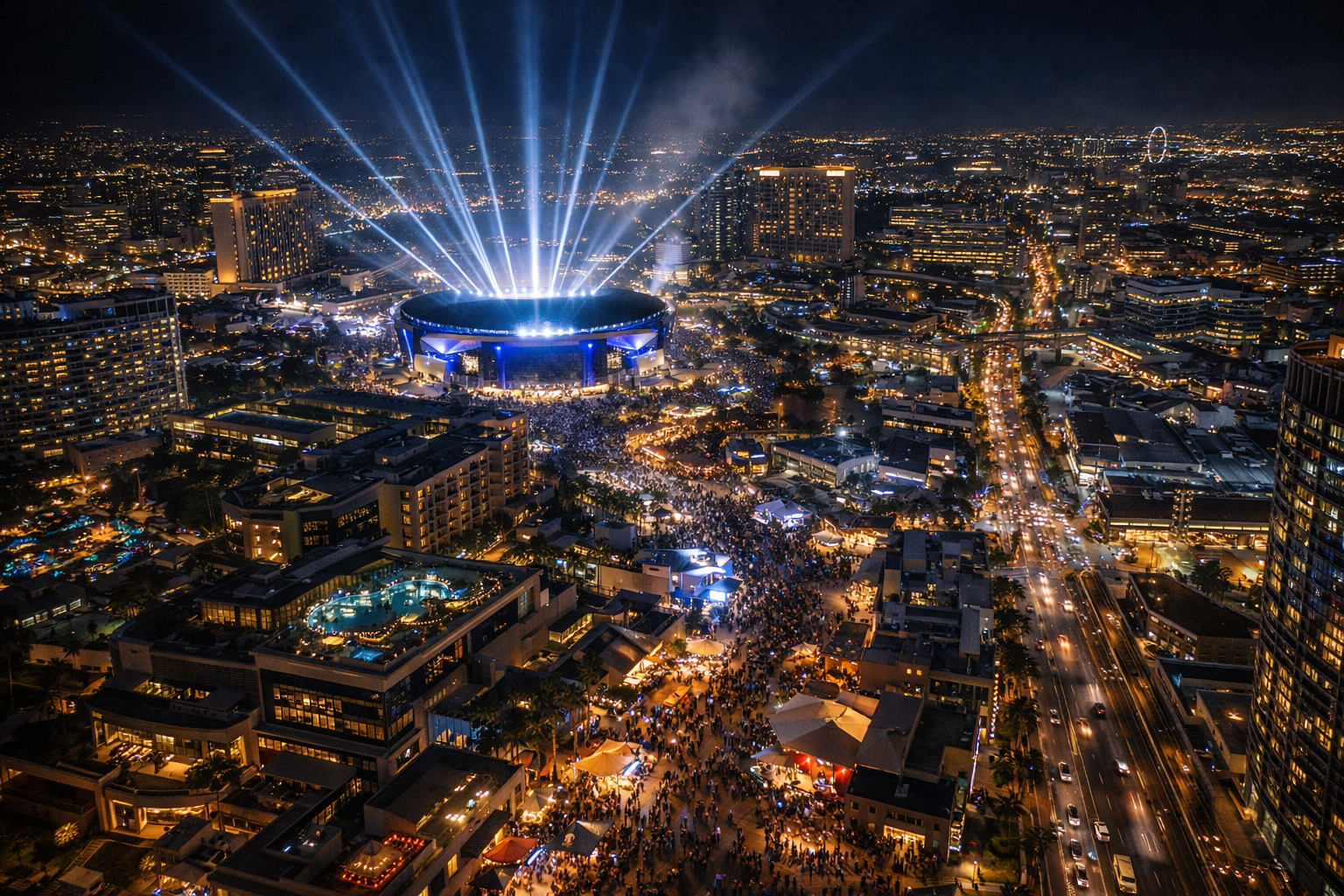
Every $100 a visitor spends on a concert ticket generates $334.92 in additional local spending — on hotels, restaurants, rideshares, and retail. That's not a guess. That's Oxford Economics data. And it means a single event doesn't just sell tickets. It creates a micro-economy.
In 2019 Oxford Economics found that every $100 a visitor spends on a concert ticket generates $334.92 of additional local spending, creating a $434.92 economic ripple. That same report pegged the live entertainment industry’s nationwide impact at $132.6 billion, supporting 913,000 jobs and feeding $42.2 billion in wages. Those numbers sound impressive on paper, but they come alive when you watch a city transform around a tour.
Take Taylor Swift’s Eras Tour. In Denver the two-night stop added $140 million to Colorado’s GDP. Los Angeles’ six shows created $320 million in economic impact and 3,300 jobs.
Fans spent an estimated $1,300 each on tickets, travel, outfits and merchandise, and analysts believe the U.S. leg of the tour generated $4.6 billion in consumer spending—more than the annual GDP of dozens of countries.
Local businesses felt it immediately: Cincinnati hotels hit 98 % occupancy and doubled revenue; Chicago set a $39 million hotel-revenue record; ride-share demand in tour cities jumped 8.2 %, with New Orleans seeing a 31 % surge. https://qz.com/how-taylor-swifts-eras-tour-smashed-records-by-the-num-1851720785
The phenomenon isn’t limited to pop music. Monroe, Wisconsin’s Cheese Days Festival draws 100,000 visitors and injects $3–4 million into a town of 11,000. The Consumer Electronics Show (CES) brings 170,000 tech enthusiasts to Las Vegas and delivers a $200–250 million boost each year. Arlington, Texas built an entertainment district around its stadiums; the $4 billion development now attracts 15 million visitors annually and events there can generate $50–100 million, sometimes $2 billion, in ROI. Even smaller gatherings like Colorado’s Telluride Film Festival, which brings 7,000 cinephiles to a town of 2,500, generate $7 million in revenue.
These aren’t isolated anecdotes, global events from Coldplay in Buenos Aires to Amsterdam’s festival season produce similar ripples, with Airbnb rates rising up to 12× and cities collecting hundreds of millions in tourism revenue.
Live tourism is booming — and people travel for it
The appetite for live experiences only seems to grow. The global event tourism market was worth $1.52 trillion in 2024 and is forecast to reach $2.13 trillion by 2033. Travel for music and festivals is a big part of that: Live Nation reports that 40 % of concertgoers traveled over 500 miles for an event in 2025, and in India alone more than 562,000 fans traveled to other cities for music events, an 18 % jump from the previous year. International visitors attending U.S. events spend about $4,000 per trip, and local spending on food, lodging and retail often triples the face value of a ticket. In other words, events aren’t just shows — they’re micro-economies.
Lessons from Taylor Swift: create “moments” that multiply
What made Swift’s tour such a powerful economic engine? It wasn’t just ticket sales. Cities and businesses layered experiences around the shows: hotels offered friendship-bracelet-making stations and photo-ops that earned an extra $25,000 over two days; ride-share companies, trains and airlines added capacity to handle demand; restaurants themed menus and extended hours. Hyatt’s CEO said the tour added “a couple hundred basis points” to global hotel revenue. In London, hotels raised rates by 22 % and still increased occupancy by 55 %, while some properties saw revenue surge 154 %. These bundled experiences turned a concert into a weekend getaway.
This layering is the secret: experiences amplify spending.
According to QloApps research, hotels near concerts can increase occupancy by 40–80 %, restaurants see 15 % more customers, and packages that include dinner, parking or shuttle rides command 30–40 % higher rates. U.S. Travel Association data mirrors this, estimating that every $100 spent on live performances generates roughly $300 in additional travel, food and merchandise spending. When you design an event as an ecosystem — with lodging, dining, experiences and merchandise — you transform a single night into a tourism economy.
By the numbers: Hotels near concerts see 40–80% occupancy increases. Restaurants gain 15% more customers. Packages that bundle dinner, parking, or shuttles command 30–40% higher rates. And every $100 spent on live performances generates roughly $300 in additional travel, food, and merchandise spending.
Why promoters should think like city planners
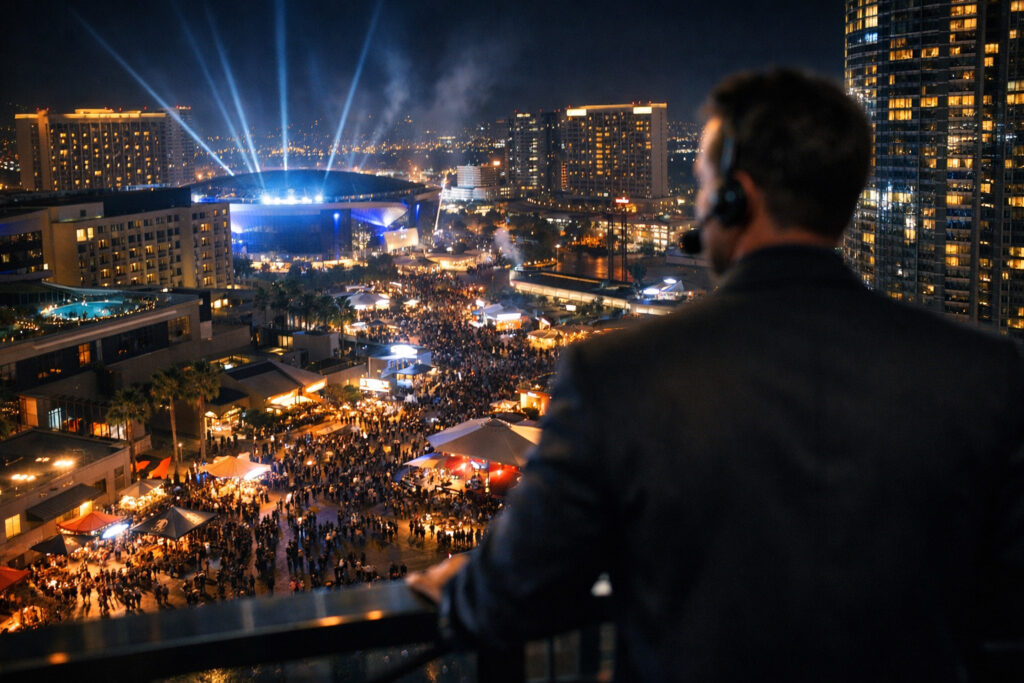
Too often, promoters leave ancillary revenue on the table by focusing solely on ticket sales. Yet the numbers show that the real money flows around the core event: hotels, restaurants, local attractions and add-ons. Experiential travel now accounts for nearly 40 % of domestic leisure spending in the U.S., and 60 % of travelers prioritize immersive experiences over traditional sightseeing.
Fans don’t just want a show; they want a story they can share.
To tap into this, promoters need to orchestrate “moments” the way cities do for mega-events. That means bundling experiences, collaborating with local businesses, and using structured audience data to tailor offers. Unfortunately, most ticketing platforms make this hard by taking over your brand and withholding customer data. TicketBlox flips that model.
How TicketBlox turns your event into an economy
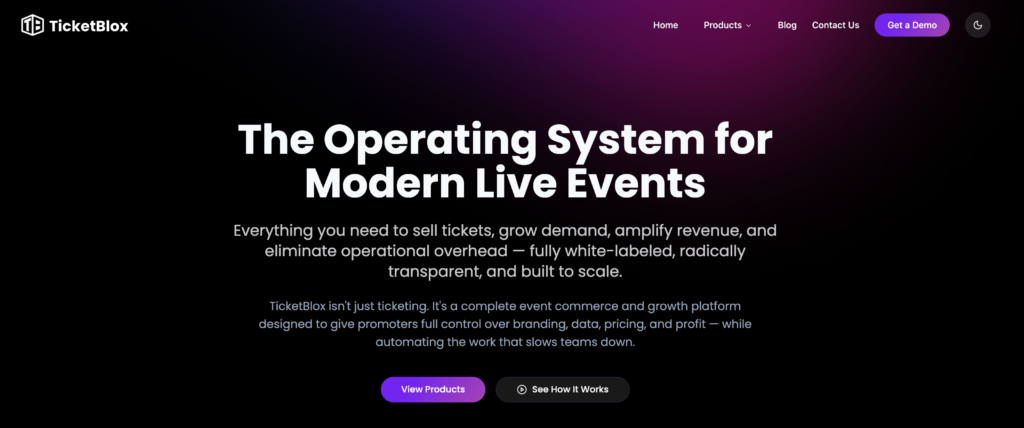
TicketBlox positions itself as “The Operating System for Modern Live Events,” giving promoters control of their brand, data and revenue streams.
Here’s a step-by-step blueprint for building your own mini-economy using TicketBlox’s tools:
- Own your storefront and pricing. TicketBlox is fully white-labeled and transparent on pricing; you control your brand, fee structures and cash flow from day one. This allows you to keep fans on your domain, display transparent pricing and build trust.
- Capture demand early with viral giveaways. Use TicketBlox Giveaways to run sweepstakes or contests that capture leads and encourage sharing. Because pricing is usage-based, you only pay when campaigns drive engagement.
- Nurture leads with Boomerang! CRM. Unlike CRM tools that charge per contact, Boomerang! lets you store unlimited contacts for free and charges only when you send messages. Use its AI-powered templates to send segmented emails, texts or DMs, reminding fans about ticket drops, hotel packages or VIP experiences.
- Bundle experiences and upsell seamlessly. TicketBlox’s Revenue Amplifiers automate abandoned-cart recovery, payment-plan markups, refund protection and cross-selling of add-ons like merchandise, parking, hotel rooms or dinner packages. For example, you could partner with a nearby hotel to offer a two-night stay with brunch and shuttle service. Hotels during concert weekends already charge 30–40 % more and still fill rooms; by bundling, you capture a share of that uplift.
- Turn attendees into promoters. The Tribe affiliate and influencer module gives each ticket buyer a unique referral link and rewards them for sales. Swift’s fans famously helped sell out shows through word of mouth; you can engineer similar viral loops that track clicks and conversions in real time.
- Optimize for discovery and support. TicketBlox offers built-in content and SEO tools to help your event rank in search and AI assistants that answer customer questions, process refunds or exchanges and can save $5–$8 per ticket. This reduces overhead and keeps fans happy.
- Get paid instantly and reinvest. With transparent fees, automated partner revenue distribution and instant payouts, you can reinvest revenues into marketing, artist payments or additional experiences without waiting weeks for settlements.
Real-world activations to inspire your next event
- Friendship-bracelet bars and photo ops. The JW Marriott Turnberry created bracelet-making stations during Swift’s Miami shows, earning an extra $25,000 in two days. Consider similar DIY stations, themed photo booths or pop-up merch shops.
- Curated tour packages. In Buenos Aires, tour operators ran 45 % occupancy increases when Coldplay played, and Chicago hotels shattered revenue records. Partner with local attractions (museums, breweries, walking tours) to create weekend itineraries.
- Transport and lodging bundles. Brightline’s “Sing-Along Train” ferried Swifties between Florida cities. Airlines added extra flights to Singapore when the country secured exclusive tour dates. Negotiate blocks of hotel rooms and secure discounted airline codes for your fans.
- City-wide branding. Glendale temporarily renamed itself “Swift City,” and Pittsburgh became “Swiftsburgh”. These gestures generated free publicity and attracted tourists. Work with local governments on street banners, art installations or temporary rebrandings to encourage community participation.
Build your own era
Events are no longer isolated nights of entertainment; they’re catalysts for travel, hospitality, retail and culture. With fans traveling hundreds of miles and spending thousands of dollars around a single ticket, promoters have a rare opportunity to design entire micro-economies. Taylor Swift’s tour didn’t magically boost city GDP by $320 million—it was the product of layered experiences, local partnerships and savvy marketing.
TicketBlox gives modern promoters the tools to replicate that formula without ceding control of their brand or data. By bundling hospitality packages, activating fans as promoters, automating revenue streams and delivering seamless support, you can transform your next event from a simple show into an operational ecosystem — one that generates memories for fans and millions for your local economy.
Frequently Asked Questions
How much economic impact does a live event generate for a local economy?
According to Oxford Economics, every $100 spent on a concert ticket generates approximately $335 in additional local spending across hotels, restaurants, transportation, and retail. Large-scale events amplify this further — Taylor Swift's Eras Tour generated $140 million in GDP impact from just two nights in Denver, and $320 million from six shows in Los Angeles.
How can event promoters capture revenue beyond ticket sales?
Promoters can bundle experiences around the core event — hotel packages, dining partnerships, VIP upgrades, merchandise, transportation bundles, and sponsor activations. Research shows that packages including lodging, parking, or shuttle rides command 30-40% higher rates than standalone offerings.
Why do events boost hotel and restaurant revenue so significantly?
Events create concentrated demand in a specific location and time window. Hotels near concert venues see 40-80% occupancy increases, and restaurants gain 15% more customers during event weekends.
What tools do promoters need to maximize event economic impact?
At minimum: white-labeled ticketing with transparent pricing, a CRM for audience management, an affiliate distribution engine, upsell and bundling capabilities, and instant payouts.
How does event tourism contribute to local economies?
The global event tourism market is worth $1.52 trillion (2024) and is projected to reach $2.13 trillion by 2033.