



When someone buys a ticket to your event, what actually happens to the money?
For event organizers, that question matters. Ticket revenue often helps cover expenses long before event day, from marketing and production to staffing, talent, and venue costs. Understanding when you get paid, how fees are handled, and whether a ticketing platform holds your money can have a direct impact on your cash flow.
TicketBlox is designed to keep that process straightforward. Payments are processed through Stripe, applicable amounts are split in real time, and organizer revenue is not held by TicketBlox until after the event.
Here’s how the process works.
What Happens When a Customer Purchases a Ticket on TicketBlox?
When a customer purchases a ticket through TicketBlox, Stripe securely processes the payment. TicketBlox uses real-time payment splitting so the applicable amounts can be separated as the transaction is processed.
This allows organizer revenue to move through the payment system on a per-order basis instead of being collected by TicketBlox and held for a later post-event settlement.
For organizers, the key difference is simple: a ticket sale can contribute to event cash flow while the event is still being planned and promoted.
Does TicketBlox Hold Ticket Revenue Until After the Event?
No. TicketBlox does not hold organizer ticket revenue until after the event.
Payments are handled on a per-order basis, and organizer funds can generally be withdrawn within 24 hours.
This can be particularly valuable for events that begin selling tickets weeks or months in advance. Instead of waiting until the event is over to access revenue, organizers can have access to funds while they are actively managing event expenses.
How Do TicketBlox Ticketing and Payment Processing Fees Work?
A TicketBlox transaction can include ticketing fees and payment-processing fees associated with the purchase.
By default, these fees can be passed on to the ticket buyer. Organizers also have the option to absorb the fees themselves.
That gives organizers flexibility in how they structure their pricing. One event may choose to display a base ticket price and have applicable fees paid by the buyer, while another may prefer to incorporate those costs into its own pricing strategy. The organizer decides which approach works best for the event.
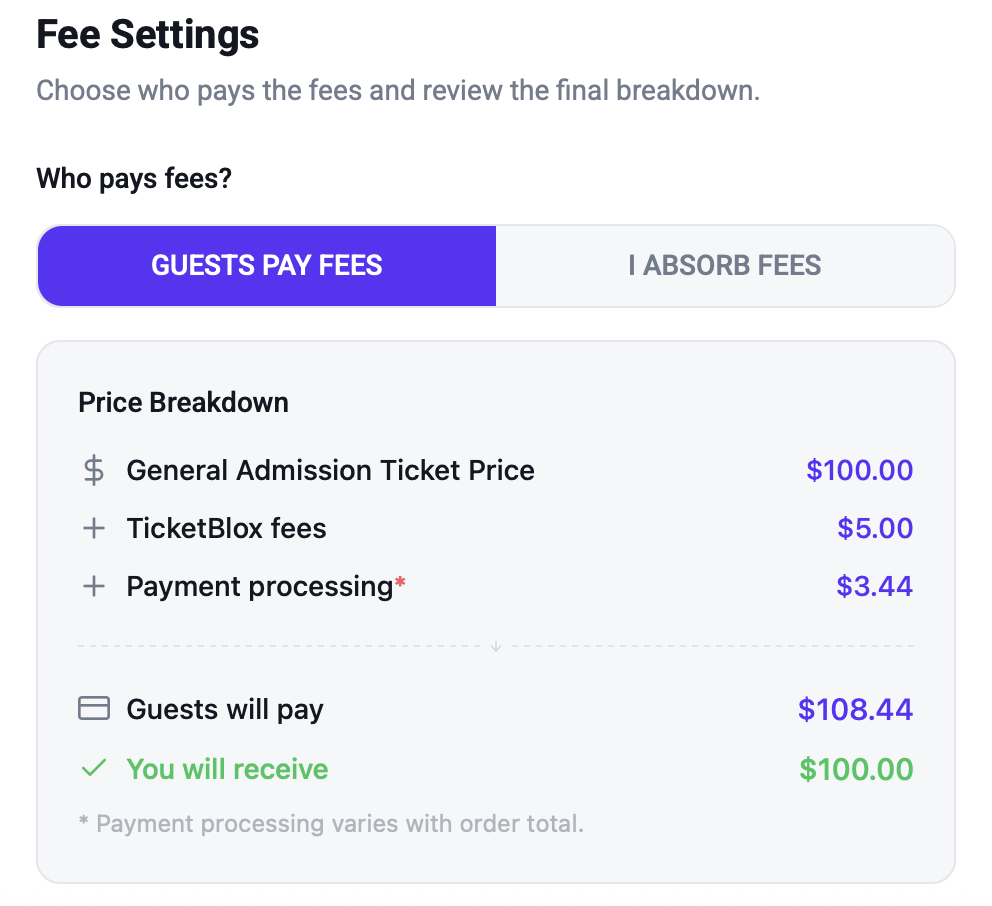
Example: Fee breakdown for a $100 TicketBlox ticket when the guest pays the TicketBlox fees.
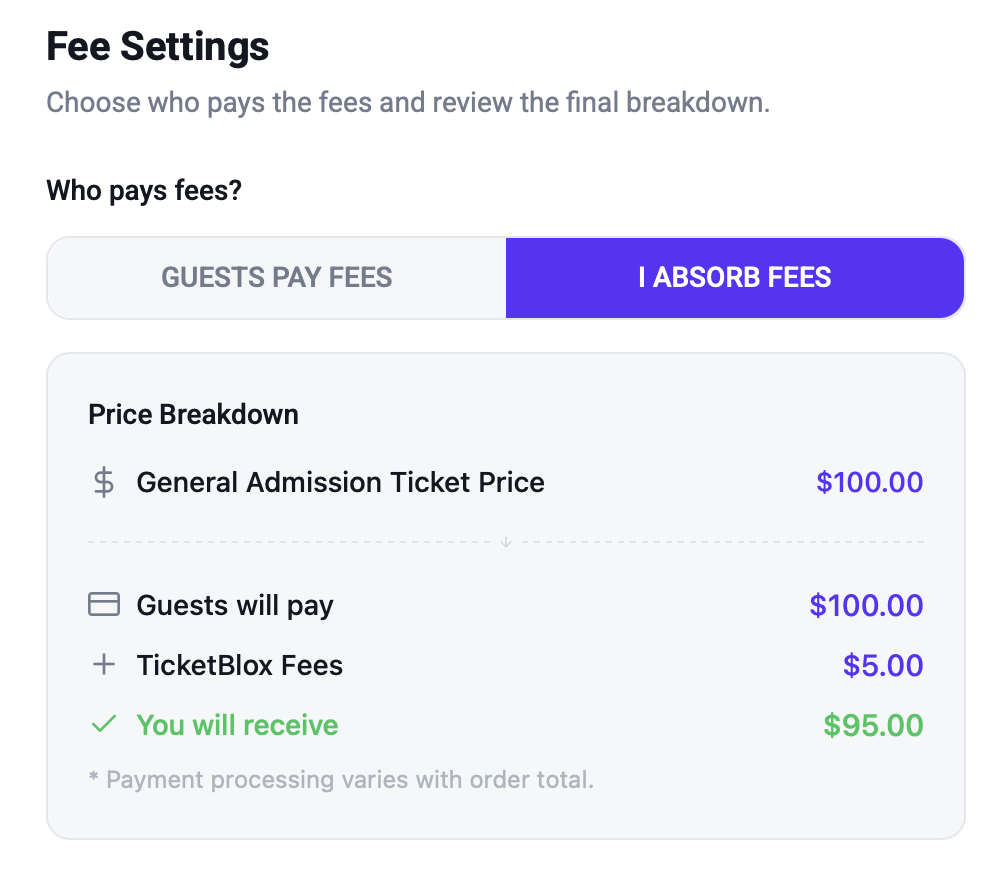
Example: Fee breakdown for the same $100 TicketBlox ticket when the organizer absorbs the TicketBlox fees.
Who Pays Ticketing Fees on TicketBlox?
Ticket buyers can pay the applicable fees by default, but organizers can choose to absorb them.
This flexibility allows organizers to decide how transaction costs fit into their ticket-pricing strategy rather than requiring every event to use the same approach.
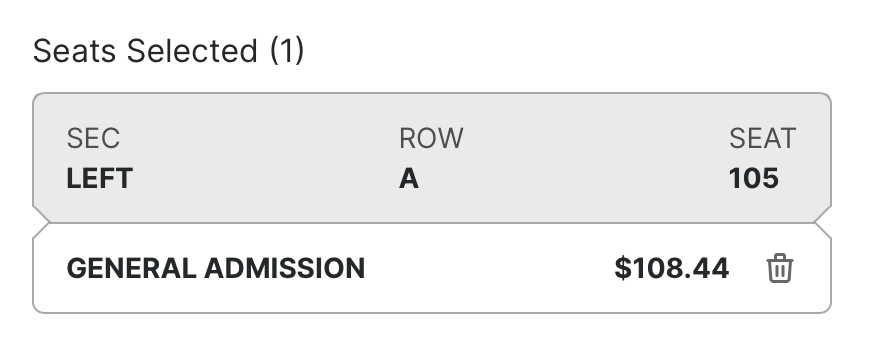
Example: Ticket price shown to the guest when TicketBlox fees are passed on.
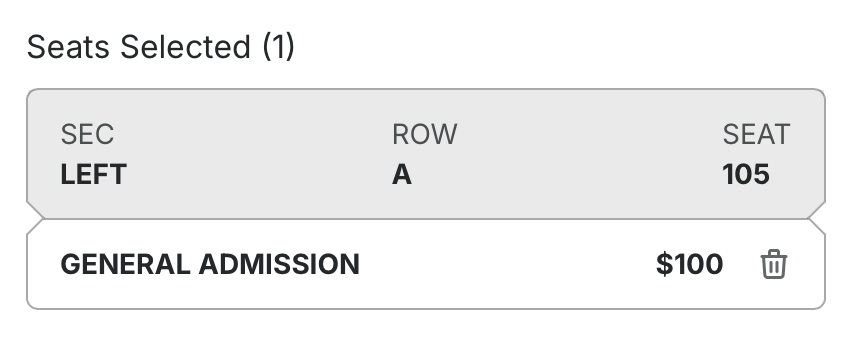
Example: Ticket price shown to the guest when the organizer absorbs the TicketBlox fees.
What Role Does Stripe Play in TicketBlox Payments?
Stripe provides the payment-processing infrastructure used for transactions through TicketBlox.
In simple terms, TicketBlox provides the ticketing and event-management platform, while Stripe powers the underlying payment processing.
This setup also supports TicketBlox's real-time payment-splitting model, allowing applicable amounts to be separated as orders are processed.
Are TicketBlox Payouts Processed Per Order or After the Event?
TicketBlox handles payments on a per-order basis rather than waiting to settle all ticket revenue after an event.
This means an organizer does not need to wait for the event to take place before having access to revenue from tickets that have already been sold.
For organizers with long sales cycles or multiple events, per-order processing can provide greater flexibility when managing ongoing expenses.
How Quickly Can Event Organizers Access Ticket Revenue?
With TicketBlox, organizer funds can generally be withdrawn within 24 hours.
Actual access to funds should therefore be understood differently from ticketing models in which the platform collects ticket revenue and holds it until an event has taken place.
That distinction can matter significantly for event cash flow.
Why Does Faster Access to Ticket Revenue Matter?
Events generate expenses before they generate experiences.
An organizer may need to pay for marketing, production, staffing, equipment, vendors, entertainment, security, or venue-related expenses well before doors open.
Consider an event that goes on sale three months in advance. Ticket sales may begin generating revenue immediately, while many of the costs associated with producing the event also need to be paid during those three months.
If a ticketing platform holds the organizer's revenue until after the event, the organizer may need to fund those expenses from other sources.
TicketBlox takes a different approach by processing payments per order and not holding organizer ticket revenue until after the event.
Does TicketBlox Charge Setup or Onboarding Fees?
No. TicketBlox does not charge setup or onboarding fees.
There are also no minimum commitments.
This allows organizers to begin using the platform without an upfront setup cost or a requirement to guarantee a minimum level of ticket sales.
What Should Organizers Ask About Ticketing Platform Payments?
Before selecting a ticketing provider, organizers should understand exactly how money moves through the platform.
Important questions include:
- Who processes the customer payment?
- What ticketing and processing fees apply?
- Who pays those fees?
- Can the organizer choose to absorb them?
- Does the ticketing company hold organizer revenue?
- Are payments handled per order or settled after the event?
- How quickly can funds be accessed?
- Are there setup or onboarding costs?
- Is there a minimum commitment?
The answers can affect much more than the cost of selling a ticket. They can affect how an organizer finances and operates the entire event.
Frequently Asked Questions About TicketBlox Payments
Does TicketBlox hold my ticket revenue?
No. TicketBlox does not hold organizer ticket revenue until after the event. Payments are handled on a per-order basis.
How quickly can I access money from TicketBlox ticket sales?
Organizer funds can generally be withdrawn within 24 hours.
Who processes TicketBlox payments?
TicketBlox uses Stripe for payment processing.
Can customers pay the ticketing fees?
Yes. Applicable fees can be passed on to buyers by default. Organizers can also choose to absorb them.
Are TicketBlox payouts processed after the event?
No. TicketBlox handles payments on a per-order basis rather than waiting for a post-event settlement.
Does TicketBlox charge setup or onboarding fees?
No. TicketBlox has no setup or onboarding fees and no minimum commitments.
A Ticketing Platform Should Help Your Cash Flow, Not Restrict It
Payment processing may happen behind the scenes, but its impact on an event is very real.
Organizers should know where their ticket revenue goes, when they can access it, what fees apply, and how much control they have over the process.
TicketBlox combines Stripe payment processing, real-time payment splitting, per-order payments, flexible fee options, and no setup or onboarding fees to give organizers greater control over the financial side of ticketing.
Because selling the ticket should be the beginning of your cash flow—not the beginning of a wait for your money.
Your Event. Your Data. Your Money — Instantly.