


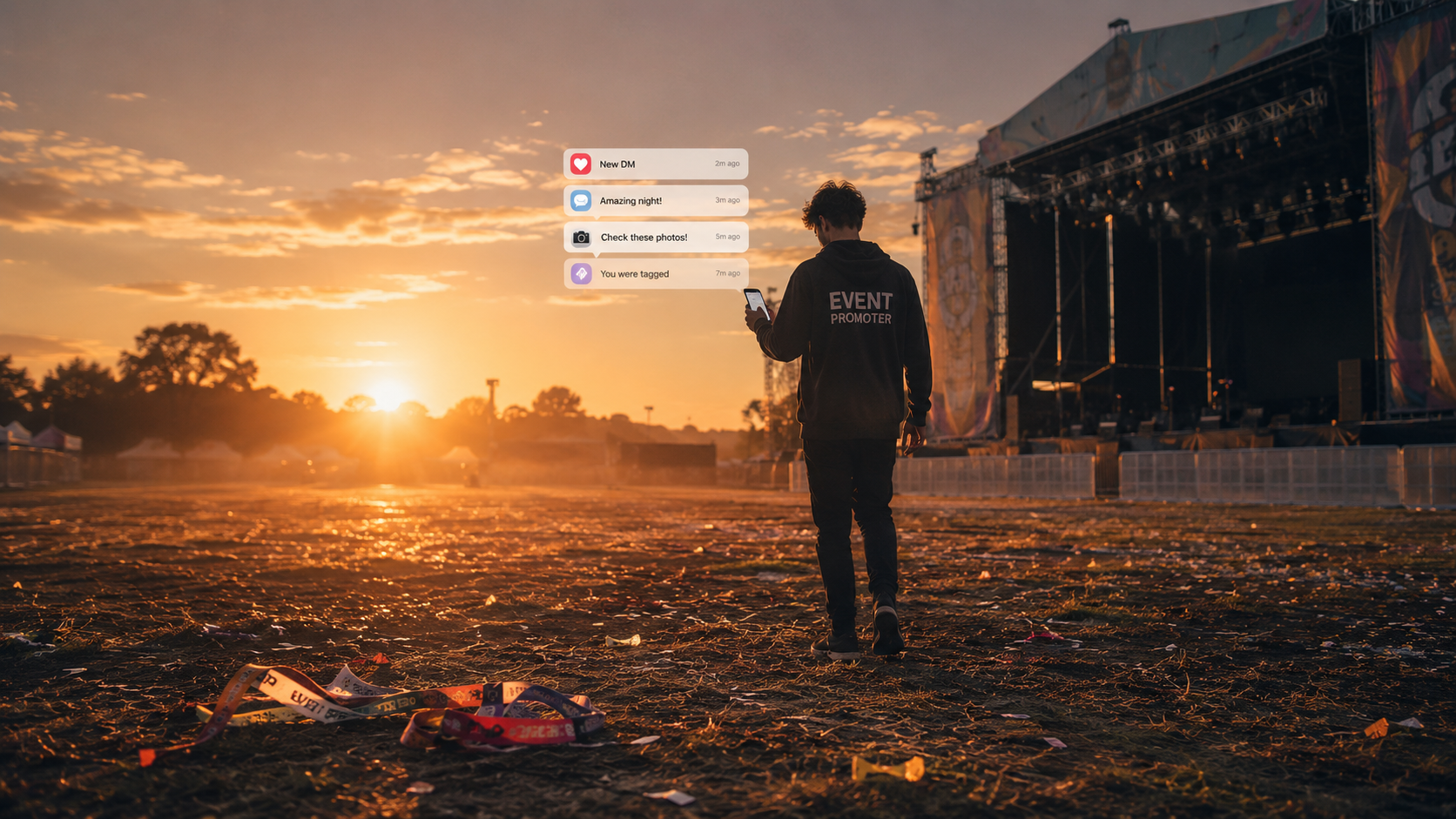
The best post-event marketing strategy starts immediately after the event ends. The first 48 hours are when attendees are most engaged, most likely to share content, and most open to buying tickets for the next event.
Most event promoters make the mistake of going quiet after the event. But that silence can cost repeat sales, referrals, feedback, and long-term audience growth.
A strong post-event marketing plan helps you turn one-time attendees into repeat buyers, brand advocates, and future ticket purchasers.
What Is Post-Event Marketing?
Post-event marketing is the process of engaging attendees after an event to collect feedback, encourage social sharing, build loyalty, and drive future ticket sales.
It usually includes thank-you messages, photo galleries, surveys, recap emails, referral links, and early access to the next event.
The goal is simple: keep the momentum going while attendees still feel connected to the experience.
Why the First 48 Hours After an Event Matter
The first 48 hours after an event are the highest-value window for attendee engagement.
During this period, people are still excited. They are checking photos, talking with friends, posting on social media, and remembering the best moments from the event.
If you wait too long, that emotional energy fades.
That is why every post-event marketing strategy should include a clear 48-hour follow-up sequence.
The Best 48-Hour Post-Event Marketing Sequence
Hour 0–2: Send a Thank-You Message
The first message should go out within two hours after the event ends.
Keep it short, warm, and simple. Thank attendees for coming and include a link to the event photo gallery.
Do not make this message sales-heavy. The goal is to reinforce the experience and encourage attendees to relive the event.
A strong first message includes:
- A genuine thank-you
- A link to event photos
- A simple, friendly tone
- No hard sales pitch
If you use event email marketing automation, this message can be triggered automatically after the event check-in window closes.
Hour 6–12: Send a Post-Event Survey
The next step is a short survey.
A good post-event survey should be sent while the experience is still fresh. Keep it to 3–5 questions so people actually complete it.
Useful questions include:
- How would you rate your experience?
- What was your favorite part of the event?
- What should we improve next time?
- What type of event would you like to attend next?
- Would you recommend this event to a friend?
Survey responses help you improve future events and better understand your audience. Over time, this data becomes one of your strongest marketing assets.
This is also where audience data and event insights become valuable.
Hour 24: Send a Social Proof Email
Twenty-four hours after the event, send a recap email that reminds attendees how great the event was.
This email should include photos, short video highlights, attendance numbers, and a referral link.
The goal is to turn attendee excitement into word-of-mouth marketing.
A strong social proof email includes:
- Professional event photos
- Short video clips
- Attendance stats
- A referral or invite link
- One clear call to action
For example, instead of saying “Share this event,” say something more direct like:
“Invite a friend to the next one and get early access.”
This is especially powerful for promoters building a recurring event series, because every event becomes a way to grow the next one.
Hour 48: Announce the Next Event or Waitlist
Forty-eight hours after the event, promote the next event.
If the next event is already confirmed, give past attendees early access to tickets. If it is not confirmed yet, send them to a waitlist.
This works because attendees feel rewarded for being part of the previous event.
A good message could say:
“You were there last time, so you get first access to the next event.”
This creates loyalty, urgency, and repeat purchase intent.
You can also use day-of-event operations data to segment your follow-up. VIP attendees, checked-in attendees, no-shows, and early arrivals should not all receive the same message.
What Data Should You Capture After an Event?
A post-event marketing strategy should also help you collect better data.
The most important data points include:
Check-In Data
Compare who bought a ticket with who actually attended.
This helps you understand no-show rates, campaign quality, and attendee behavior.
Survey Responses
Survey answers help you understand what people loved, what needs improvement, and what they want next.
Social Engagement
Track which photos, videos, and posts get the most shares, comments, and saves.
This tells you what moments mattered most to your audience.
Referral Activity
Track which attendees bring in the most new people.
These attendees are your strongest advocates and should be rewarded with perks, early access, or VIP treatment.
Why Most Promoters Fail at Post-Event Marketing
Most promoters fail because they do not have a system ready before the event ends.
They wait too long, forget to follow up, or try to send everything manually.
The biggest mistakes are:
- Waiting several days to contact attendees
- Sending long surveys
- Forgetting to share photos quickly
- Not promoting the next event while interest is high
- Not using automation
- Treating every attendee the same
With the right system, post-event marketing does not have to be complicated. The sequence can be built once and reused after every event.
Post-Event Marketing Checklist
| Timing | Action | Goal |
|---|---|---|
| 0–2 hours | Thank-you message + photo gallery | Reinforce the experience |
| 6–12 hours | Short survey | Collect feedback |
| 24 hours | Recap + social proof email | Encourage sharing |
| 48 hours | Next event or waitlist | Drive repeat sales |
FAQ: Post-Event Marketing Strategy
What is the best post-event marketing strategy?
The best post-event marketing strategy is a 48-hour follow-up sequence that includes a thank-you message, a short survey, a social proof email, and an early-access offer for the next event.
When should you contact attendees after an event?
You should contact attendees within two hours after the event ends. This is when they are most engaged and most likely to view photos, share content, and respond positively.
What should be included in a post-event email?
A post-event email should include a thank-you message, event photos, highlights, useful next steps, and one clear call to action. Avoid overwhelming attendees with too many links or requests.
How do you get attendees to come back to future events?
To get attendees to return, thank them quickly, ask for feedback, remind them of the event experience, and give them early access to the next event. Loyalty grows when attendees feel recognized and valued.
Why are post-event surveys important?
Post-event surveys help promoters understand what attendees liked, what should improve, and what kind of events they want next. This feedback helps improve future events and increase repeat attendance.
Final Takeaway
The 48 hours after your event are not downtime. They are your best opportunity to build loyalty, collect feedback, generate referrals, and sell the next event.
Promoters who follow up quickly have a major advantage over those who wait.
With the right post-event marketing strategy, every event becomes more than a one-time experience. It becomes the starting point for your next sale, your next referral, and your next loyal attendee.
Book a Demo to see how TicketBlox helps event promoters automate post-event marketing and turn every event into a growth engine.