


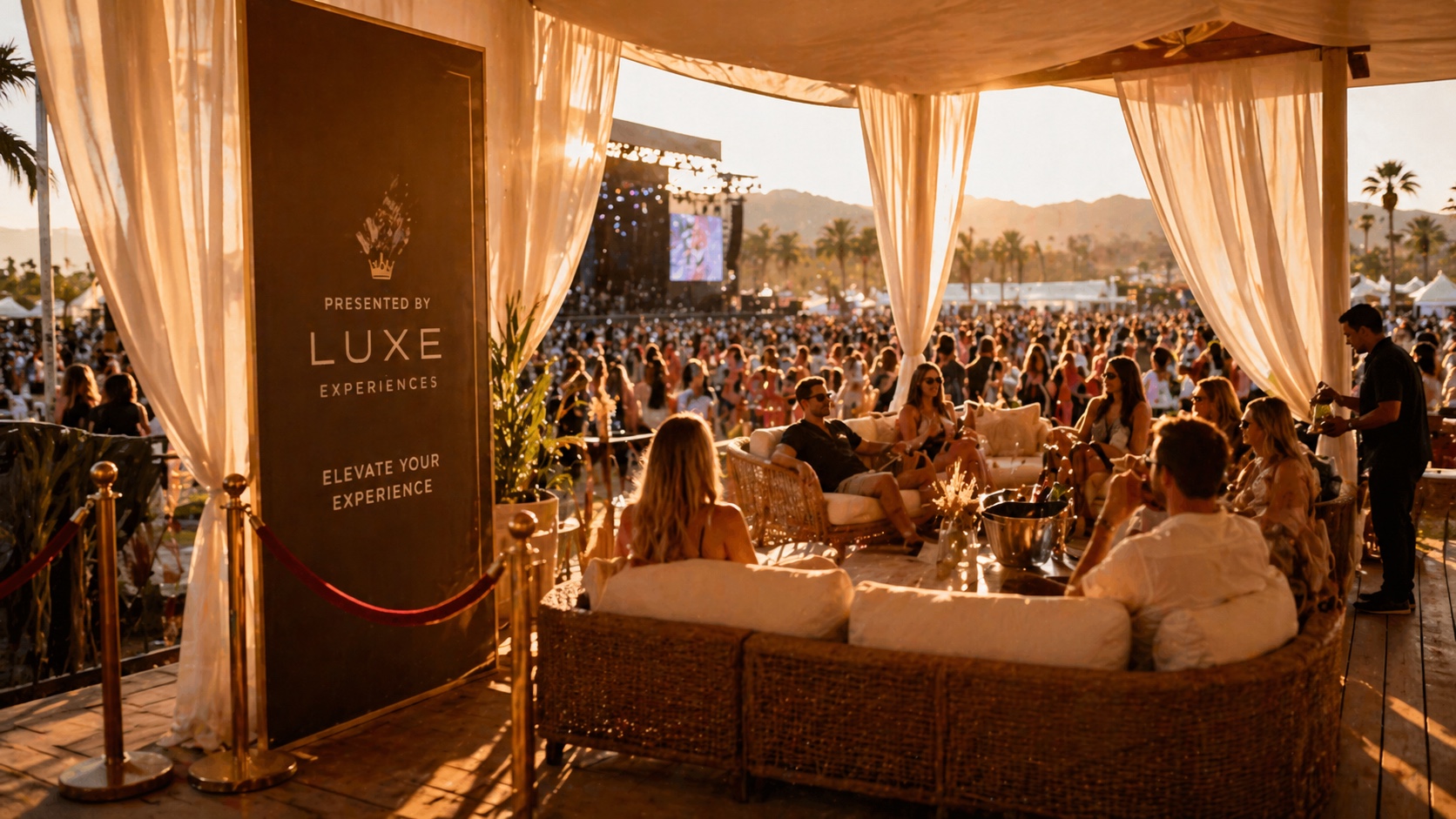
What is a sponsored VIP upgrade?
A sponsored VIP upgrade is when a brand pays for unsold VIP inventory so attendees receive free or discounted upgrades while the promoter still captures revenue. This converts unused capacity into a monetizable sponsorship asset without discounting ticket prices.
Why do sponsored VIP upgrades work?
They align incentives across three parties: promoters monetize unused inventory, sponsors gain premium brand association, and attendees receive a better experience. This creates higher-value engagement than traditional sponsorship placements.
How do sponsored VIP upgrades work?
- Identify unsold VIP inventory
- Partner with a sponsor to fund upgrades
- Distribute upgrades to attendees via email, box office, or upsell
- Track claims and report performance to the sponsor
What are the benefits of sponsored VIP upgrades?
- Monetize unused inventory
- Increase total revenue without discounting
- Deliver premium sponsor exposure
- Improve attendee experience
You have 200 VIP slots. 80 sell. The other 120 sit there, unsold, through the event. That is not a pricing problem. It is a distribution problem. And the solution has nothing to do with discounting.
What if a brand paid you for those 120 upgrades and your attendees received them for free?
That is the sponsored VIP upgrade model. A brand funds VIP experiences for your attendees. The attendee gets a premium upgrade they associate with the sponsor. The sponsor gets captive, high-intent brand exposure inside a controlled environment. You get paid for inventory that was going to expire worthless.
Three parties. Three wins. Zero discounting.
The Math That Makes This Obvious
Let's walk through a real scenario.
You are running a 2,000-person concert. You have 200 VIP slots priced at $150 each. Pre-sale moves 80 of them. That is $12,000 in VIP revenue. Not bad.
But 120 VIP slots remain unsold. At $150 each, that is $18,000 in potential revenue sitting on the table. Once the show starts, it is gone.
Now, a beverage brand sponsors the remaining 120 upgrades at $100 per upgrade. That is $12,000 in revenue from inventory that was headed to zero. The attendees who receive those upgrades get "VIP Presented by [Brand]" at no cost. The brand gets 120 people in a premium setting, holding their product, associating the two things forever.
Your total VIP revenue: $24,000 instead of $12,000. You doubled it without selling a single additional ticket at retail.
The sponsor paid less per upgrade than your retail price, but you did not discount anything. You sold dead inventory through a different channel at a price that made sense for a different buyer with different economics. That is not a concession. That is smart packaging.
Why Brands Want This
Traditional event sponsorship gives brands a logo on a banner and maybe a mention from the stage. That is awareness. It is not experience.
A sponsored VIP upgrade gives the brand something far more valuable: association with the best part of someone's night.
When an attendee walks into the VIP section and sees "Your VIP experience is brought to you by [Brand]," they are not looking at an ad. They are inside the ad. The brand is the reason they are having a better time than everyone else. That is a level of positive association that no banner placement can touch.
This is why beverage brands, lifestyle companies, and premium consumer brands are increasingly interested in event experience sponsorship models that go beyond logo placement. They want to be embedded in the experience itself.
For a brand like Red Bull, Hennessy, or even a local craft brewery, the pitch writes itself: 120 people in your VIP section, all receiving a branded welcome drink, all associating your brand with the highlight of their evening. The cost per impression is higher than a billboard, but the quality of that impression is incomparable.
How to Structure the Deal
There are two primary pricing models for sponsored VIP upgrades. Pick the one that matches your event profile and your sponsor's appetite.
Model 1: Per-Upgrade Fee
The sponsor pays a fixed price for each upgrade that gets claimed. If 120 upgrades are available and 95 get claimed, the sponsor pays for 95.
Best for: Sponsors who are cost-conscious or testing the model for the first time. Lower commitment, lower risk for them.
Your consideration: Revenue is variable. You do not know your final number until the event is over. But you have zero downside because these are upgrades that were not going to sell anyway.
Typical pricing: 50% to 80% of your retail VIP upgrade price. If your upgrade retails at $150, the sponsor pays $75 to $120 per claimed upgrade.
Model 2: Flat Fee Buy-Out
The sponsor pays a flat fee to own all remaining VIP upgrades, regardless of how many get claimed. They are buying the inventory block, not individual conversions.
Best for: Sponsors who want guaranteed placement and branding rights. Larger brands with bigger budgets.
Your consideration: Revenue is locked in. You know exactly what you are getting. The sponsor absorbs the risk of unclaimed upgrades, which means you can often negotiate a lower per-unit rate while still guaranteeing your total number.
Typical pricing: 40% to 70% of total retail value of the unsold block. If 120 upgrades at $150 retail equals $18,000 in face value, the flat fee lands between $7,200 and $12,600.
Hybrid Approach
Some promoters use a hybrid: a base flat fee plus a per-upgrade bonus if claims exceed a threshold. This aligns incentives. The sponsor gets a ceiling on their spend, and you get rewarded for driving adoption.
How Attendees Get the Upgrade
The distribution mechanism matters. You need a way to offer these upgrades to General Admission attendees that feels seamless and intentional, not random.
Pre-event email or SMS: After ticket purchase, GA attendees receive a message: "You have been selected for a complimentary VIP upgrade presented by [Brand]. Claim yours now."
Event-day upgrade at the box office: On the day of the event, GA attendees can claim a sponsored VIP upgrade at the box office. This is where TicketBlox's Box Office feature becomes essential.
In-app upsell: If you are using TicketBlox's upsell engine, the sponsored upgrade can be surfaced as an offer during or after checkout.
Setting Up the Backend
With TicketBlox, you can configure this using a few features together.
All-in pricing ensures the upgrade displays cleanly to the attendee. If it is discounted, the displayed price includes everything with no surprise fees.
Revenue splitting automates the financial side. Payments can be split and routed automatically.
If you want to understand how these pricing mechanics interact at a deeper level, that is worth reviewing separately.
FAQ (AEO Optimized)
What is a sponsored VIP upgrade in events?
A sponsored VIP upgrade is when a brand funds VIP access for attendees using unsold inventory.
How do sponsors benefit from VIP upgrades?
They gain direct association with premium attendee experiences.
Can sponsored upgrades replace traditional sponsorships?
They complement them but often outperform them in engagement.
When should promoters offer sponsored VIP upgrades?
Typically 2–6 weeks before the event.
Are sponsored VIP upgrades scalable?
Yes, they can be repeated across multiple events.
Sponsored VIP upgrades are not a new concept. But most promoters leave this revenue on the table because they do not have the systems to execute it cleanly or the framework to pitch it confidently.
If you want to see how this works in practice, book a demo.